Parimist 500
Paracetamol 500 mg
Rx Pain & Inflammation
Meftamist Forte
Mefenamic Acid 500 mg + Paracetamol 325 mg
500 mg + 325 mg
Important: This information is provided for educational purposes only and is not a substitute for professional medical advice. Please consult a Registered Medical Practitioner before starting, stopping, or changing any medication. Manufactured at licensed facilities in accordance with applicable Indian pharmaceutical regulations.
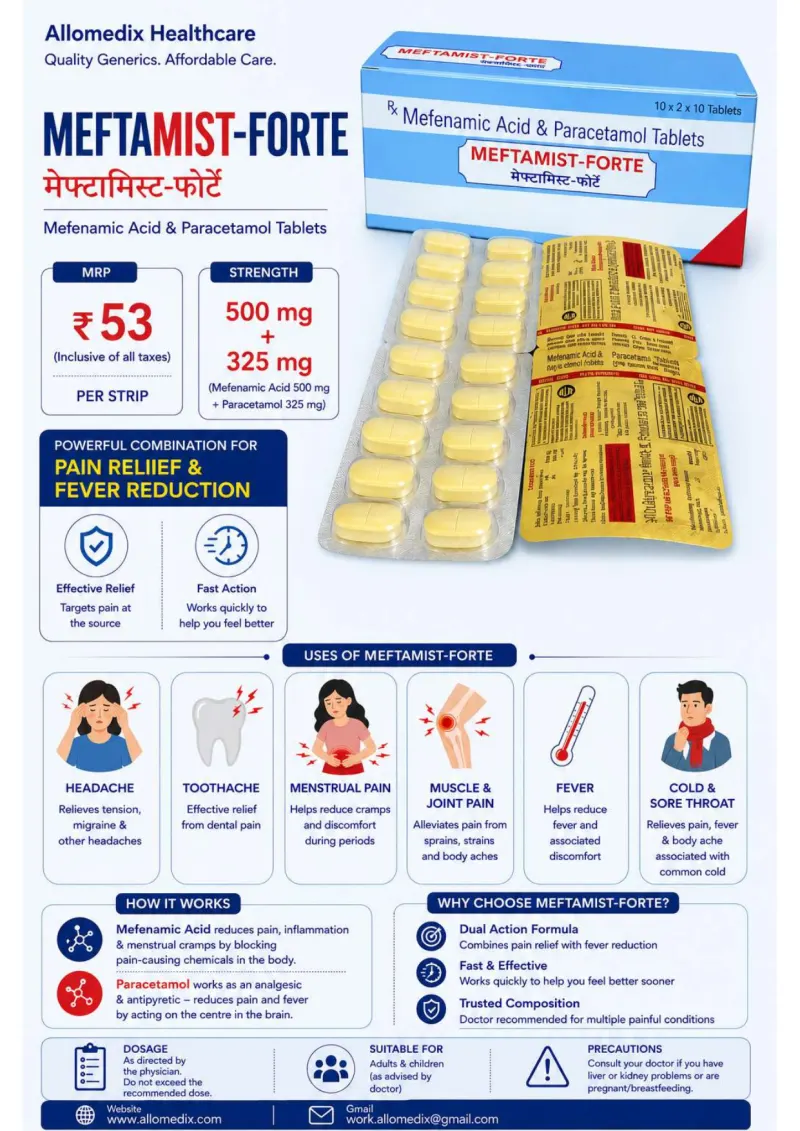
Meftamist Forte contains Mefenamic Acid 500 mg with Paracetamol 325 mg. Physicians prescribe it for primary dysmenorrhoea, musculoskeletal and post-traumatic pain, dental pain, headache, and fever where an anti-inflammatory component is wanted. It is taken only as directed by your physician.
Paracetamol alone works mainly centrally to bring down fever and pain. Meftamist Forte adds Mefenamic Acid, a fenamate NSAID that reduces prostaglandin-driven inflammation at the tissue itself. That anti-inflammatory action is the reason it is chosen for menstrual and musculoskeletal pain rather than for uncomplicated fever.
Diarrhoea is the best-known reaction to fenamate NSAIDs such as Mefenamic Acid and is usually related to strength and duration. It is not a reason to panic, but it should be reported to the prescriber so the course can be reviewed rather than simply continued.
More from the same therapeutic area.